


Baltimore DPW Rolls Out ‘OOPS Tag’ Program to Curb Recycling Contamination


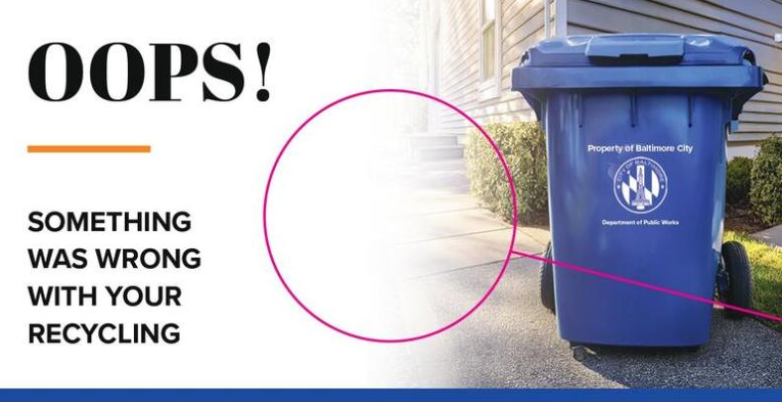
Photo Credit: City of Baltimore
The Baltimore City Department of Public Works has launched a citywide “OOPS Tag” initiative aimed at cutting contamination in residential recycling, a problem officials say is driving up processing costs and undermining material recovery. The program, announced last week, authorizes crews to leave tags on carts containing non-acceptable items and requires residents to correct the contents before collection resumes.
City officials said confusion over what belongs in curbside recycling has led to rising levels of rejected material. When plastic bags, food-soiled containers or other prohibited items enter the recycling stream, entire truckloads can be downgraded or diverted to disposal, increasing expenses and eroding diversion rates.
Under the new system, sanitation workers will attach a brightly marked tag to bins found with contaminants. The notice identifies the issue and instructs residents to remove the offending materials before the next scheduled pickup. Once corrected, the cart will be serviced on its regular collection day.
Public Works Director Matthew Garbark said the measure is designed to protect taxpayer resources while reinforcing environmental goals. He added that cleaner recycling streams improve efficiency at processing facilities and increase the likelihood that materials are successfully remanufactured.
Common contaminants cited by the department include plastic bags and film packaging, batteries, hoses and cords that can tangle sorting equipment, textiles, construction debris and containers with food residue. Analysts note that “wishcycling”—the practice of placing questionable items in recycling bins in hopes they will be accepted—remains a widespread issue in U.S. cities. The U.S. Environmental Protection Agency has previously estimated national recycling contamination rates in the low-to-mid teens, though local figures vary significantly depending on education and enforcement efforts.
Baltimore’s curbside program accepts clean paper and cardboard, metal cans, plastic bottles and containers, and glass bottles and jars. All items must be empty, clean and dry. Materials not permitted at the curb can be delivered to city residential recycling centers, which handle items such as mattresses, electronics and certain specialty waste streams.
Municipalities across the country have adopted similar tagging strategies in recent years as processing contracts become more stringent and commodity markets demand higher-quality feedstock. Industry groups argue that targeted feedback to households can reduce contamination faster than broad public awareness campaigns alone.
DPW officials said the city will monitor participation and contamination levels as the initiative progresses. Observers say sustained outreach and consistent enforcement will determine whether the program yields measurable improvements in recovery rates and cost control.
Source: City of Baltimore
SUNSHINE Spotlight: Baltimore’s OOPS Tag rollout reflects a growing municipal push to tighten recycling standards and reduce costly contamination at the curb.


