


Redwood Materials Advances Battery Recycling with Automated Sorting Technology


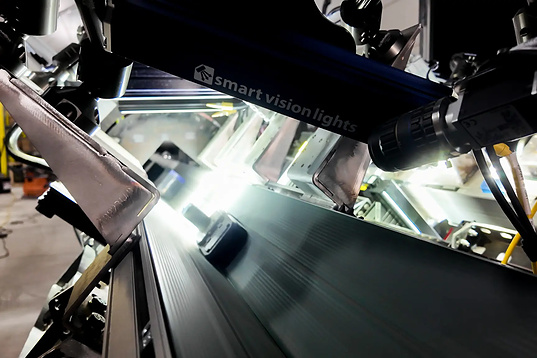
Photo Credit: Redwood Materials
U.S. battery recycling company Redwood Materials has brought an automated battery sorting line into operation, using computer vision and machine learning to identify and separate different battery chemistries. Already processing materials from the company's recycling network, the system has achieved classification accuracy exceeding 98%, marking a significant step toward reducing manual sorting requirements in large-scale battery recycling.
Accurate identification of incoming batteries is essential for maintaining consistent recycling operations. Redwood processes materials collected from across the United States, including consumer electronics batteries, battery cells and electric vehicle modules. Much of this material is directed to a rotary calciner designed to handle more than 40,000 metric tons annually, equivalent to approximately 15–20 GWh of battery capacity. Variations in battery chemistry can affect downstream processing, making reliable sorting an important part of improving recovered metal quality and minimizing equipment wear.
To address these challenges, Redwood developed a multi-stage system that separates mixed battery shipments into individual units before inspection. High-resolution cameras capture battery markings and labels, while laser measurement equipment and weighing systems collect information about each battery's dimensions and weight. Machine learning models then analyze the combined data to identify battery chemistry and direct materials into appropriate processing streams. The system operates at a throughput of several metric tons per hour, with classification results available before batteries reach the sorting line's discharge point.
Instead of relying on the X-ray technology used in an earlier version, Redwood adopted conventional cameras after determining that external battery characteristics provided sufficient information for classification. This approach reduced system complexity and improved its potential for wider deployment. Continuous performance monitoring also allows engineers to identify sorting errors and refine the models using operational data.
Beyond improving efficiency, the technology addresses a major challenge in battery recycling: preventing unsuitable materials from entering processing streams while avoiding the unnecessary rejection of valuable batteries. Better sorting accuracy could reduce contamination and support higher recovery of lithium, nickel and cobalt. As battery waste volumes increase, automated identification systems may become increasingly important for maintaining consistent feedstock quality and controlling processing costs.
Source: Redwood Materials
SUNSHINE Spotlight: Redwood's automated sorting system demonstrates how computer vision can address practical challenges in industrial battery recycling. By improving feedstock classification before thermal processing, the technology could help recyclers reduce material losses, improve recovery consistency and handle increasingly diverse battery waste streams.


