


EU-Funded BioSupPack Project Converts Brewery Waste into Biobased Packaging Materials


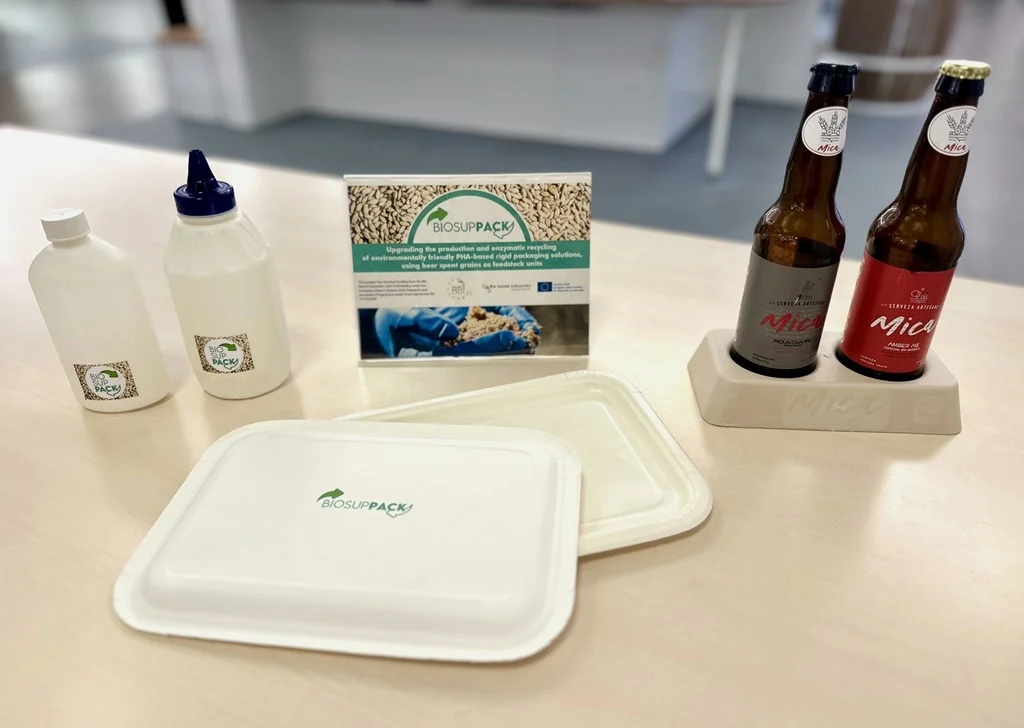
Photo Credit: AIMPLAS
According to industry reports, the EU-funded BioSupPack initiative has demonstrated the potential to convert brewery waste into high-performance bioplastics, offering a pathway toward more sustainable packaging solutions aligned with European regulatory requirements. After five years of research and development, the project has validated production processes for polyhydroxyalkanoates (PHA and PHB), positioning these materials as alternatives to fossil-based plastics.
Coordinated by AIMPLAS, the consortium brought together 18 partners across the bioplastics value chain. The project received €7.6 million in funding from the Circular Bio-based Europe Joint Undertaking under the Horizon 2020 programme and has now reached completion after five years of development.
At the core of the project is a biorefinery process that converts brewery spent grains into PHB through plasma pretreatment and microbial fermentation. The process has reached Technology Readiness Level (TRL) 6, demonstrating feasibility in industrially relevant environments. In addition, the consortium developed PHA-based coatings that are largely biobased and biodegradable, designed to replace conventional polyethylene and PVC coatings in packaging and textile applications.
Further developments include compostable fibre-based packaging with barrier properties comparable to traditional plastics, as well as PHB-based materials tailored for rigid packaging such as bottles and retail displays. Several applications have reached TRL 7, indicating readiness for industrial-scale deployment. The project also advanced enzymatic recycling processes and sorting technologies to support end-of-life management of these new materials.
The work comes at a time when Europe’s packaging sector is facing tighter regulatory requirements, particularly under the Packaging and Packaging Waste Regulation (PPWR). Proposed rules are expected to require all packaging to be recyclable by 2030, increasing demand for alternative materials that can meet both performance and sustainability criteria.
For industry, the project points to a growing role for industrial symbiosis—where waste streams from one sector become feedstock for another. Brewery by-products are a clear example. Turning them into usable materials could help reduce reliance on virgin fossil resources while improving overall resource efficiency.
That said, scaling these technologies remains a challenge. Cost competitiveness and the availability of consistent waste feedstock are likely to influence how quickly such materials can move into wider commercial use.
The project’s outcomes are now available for uptake by stakeholders across the value chain, including biopolymer producers, packaging manufacturers, and consumer goods companies. The results also contribute to broader EU policy goals under the European Green Deal and bioeconomy strategies, which emphasize sustainability, resource security, and reduced emissions.
Source: AIMPLAS
SUNSHINE Spotlight: BioSupPack demonstrates how industrial waste streams can be transformed into scalable, biobased packaging solutions aligned with Europe’s circular economy and regulatory goals.


