


Motherson and PureCycle Develop Automotive Bumper Prototype with 30% Recycled Polypropylene


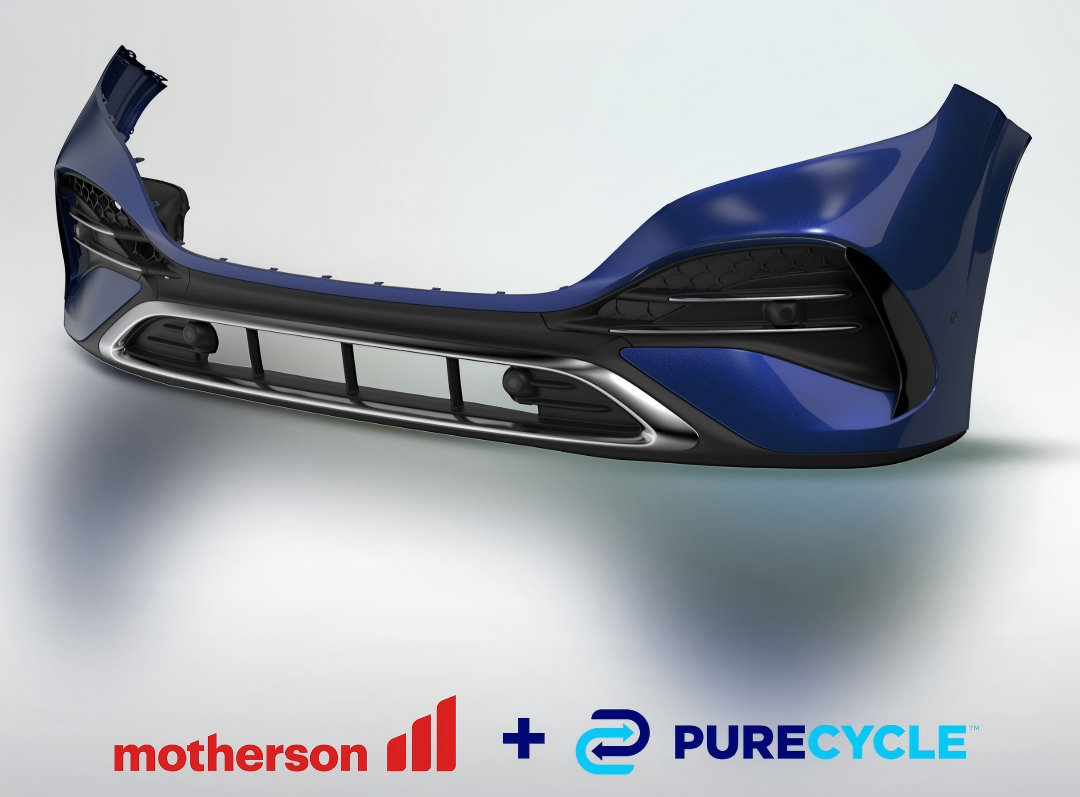
Photo Credit: PureCycle
PureCycle Technologies and the Modules & Polymer Products Division of Motherson have developed a Class-A surface automotive bumper prototype containing 30% PureFive® recycled polypropylene (PP), demonstrating the potential for recycled plastics in exterior vehicle components as the automotive industry prepares for new recycled-content requirements under the European Union’s proposed End-of-Life Vehicles (ELV) Regulation.
The prototype was manufactured at Motherson’s facility in Tuscaloosa, Alabama, with feasibility studies and technical validation led by the company’s Global Innovation Team in Germany. The bumper has completed climate durability and mechanical performance testing, and the companies plan to present the technical results at the Startup Autobahn Expo in Stuttgart on July 2.
The project highlights ongoing efforts by automotive suppliers to incorporate recycled materials into Class-A exterior components, which require high standards for surface finish, appearance and performance. If successfully commercialized, the approach could help vehicle manufacturers increase recycled plastic content while meeting stringent quality specifications.
Motherson said the collaboration is intended to evaluate the use of recycled polypropylene in premium automotive applications through extensive testing while supporting compliance with future EU vehicle recycling requirements. Fabian Wehrle, Global Innovation Exterior Engineer at Motherson, said the project represents an important step toward integrating recycled materials into components that meet original equipment manufacturer (OEM) standards for visible exterior parts.
The timing coincides with the EU’s proposed ELV Regulation, which would introduce mandatory recycled plastic content requirements for new vehicles. Under the current proposal, new vehicles would be required to contain at least 15% recycled plastic by 2032, including a minimum of 3% sourced from end-of-life vehicles. Those thresholds would increase to 25% and 5%, respectively, by 2036, subject to final adoption.
PureCycle uses a patented dissolution recycling process that removes color, odor and contaminants from post-consumer polypropylene to produce recycled resin with properties comparable to virgin material. According to the company, its PureFive® resin is third-party certified for recycled content, supporting the traceability and documentation expected under future regulatory requirements.
To support growing demand from automotive manufacturers, PureCycle is expanding its production capacity with dissolution recycling facilities under development in Antwerp, Belgium, and Rayong, Thailand. Both plants are expected to begin operations before 2030, with the Antwerp facility intended to supply European customers ahead of the proposed ELV compliance deadlines.
Nicolas Elwing, Senior Director of Commercial for Europe at PureCycle, said the collaboration demonstrates the potential for combining high-quality recycled polypropylene with the appearance standards required for Class-A automotive components. He added that the companies will continue developing automotive-grade material specifications and explore broader applications for recycled polypropylene in both exterior and interior vehicle parts.
Future development will focus on increasing recycled content beyond 30%, assessing mass-production feasibility, and advancing closed-loop recycling systems capable of returning end-of-life automotive bumpers into new vehicle components.
Source: PureCycle
SUNSHINE Spotlight: As the EU moves toward mandatory recycled-content requirements for vehicles, collaborations between recyclers and automotive suppliers are accelerating the development of high-quality recycled polypropylene for demanding exterior automotive applications.


