


NAPCOR Roadmap Outlines Path to Lower Emissions Across U.S. PET Packaging


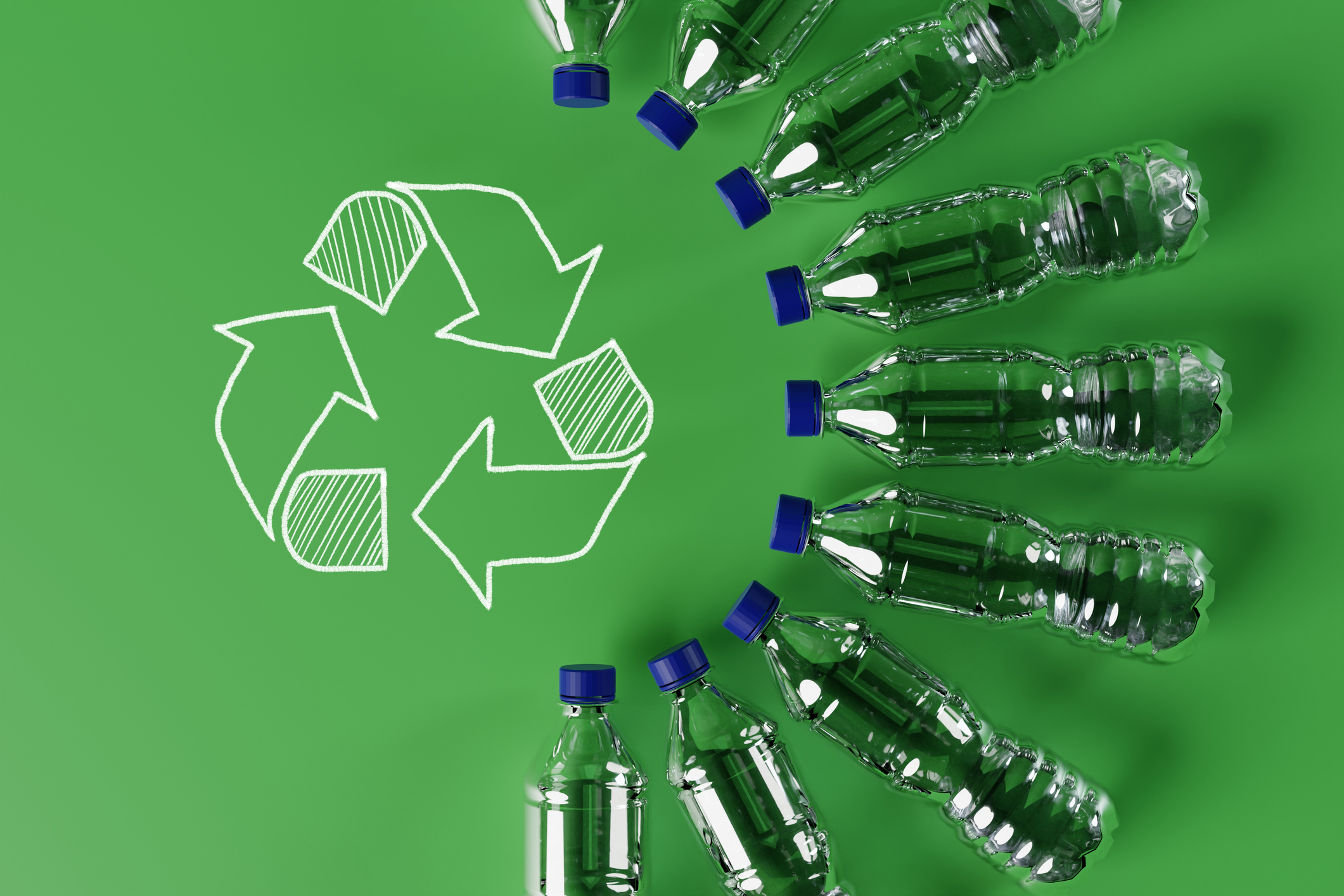
The National Association for PET Container Resources (NAPCOR) has released a new decarbonization roadmap examining how greenhouse gas emissions associated with PET beverage bottles in the United States could decline through 2050, even as production increases.
Developed by independent environmental consulting firm Eastern Research Group (ERG), the PET Forward: A Decarbonization Roadmap for the PET Packaging Value Chain projects that the life cycle greenhouse gas emissions intensity of the PET beverage bottle systems studied could fall by approximately 57% by 2050. Total annual emissions from those systems could decline by about 42% over the same period, despite higher production volumes.
The ISO-compliant analysis examines four common PET beverage bottle systems sold in the U.S.: 16.9-ounce water bottles and 16.9-ounce, 20-ounce and 2-liter carbonated soft drink bottles. It evaluates emissions across the life cycle, including raw material production, manufacturing, transportation and end-of-life management. The final report was independently peer-reviewed.
According to NAPCOR, the modeled pathway combines measures already available across the PET value chain with longer-term improvements in collection, recycling and infrastructure. Lightweighting, renewable energy and manufacturing efficiency are among the measures that can contribute to emissions reductions, while higher collection rates, greater recycled content and expanded recycling capacity could support further gains.
The roadmap projects that emissions intensity could decline significantly before 2050. For a 16.9-ounce PET water bottle system, emissions per 1,000 gallons of beverage delivered could fall approximately 44% by 2035 from the 2023 baseline. The three carbonated soft drink bottle systems analyzed could achieve reductions of approximately 35% to 43% over the same period.
NAPCOR said the analysis also highlights dependencies beyond individual manufacturers. Reliable supplies of high-quality recycled PET, stronger collection and sorting systems, expanded domestic recycling capacity and continued investment in infrastructure are identified as factors that could affect the pace of emissions reductions.
The roadmap builds on NAPCOR’s 2023 peer-reviewed life cycle assessment, which compared the greenhouse gas footprints of PET, aluminum and glass beverage containers. NAPCOR said the new analysis is intended to model the cumulative effects of multiple strategies rather than rely on a single technological breakthrough.
The organization also linked increased domestic PET recycling with manufacturing and supply-chain considerations. Expanding collection and processing capacity could increase the availability of recycled PET for U.S. manufacturers while reducing the life cycle emissions associated with PET packaging
Source: NAPCOR
SUNSHINE Spotlight: NAPCOR’s new roadmap models a potential 57% reduction in life cycle emissions intensity for the U.S. PET beverage bottle systems studied by 2050, with higher recycling and improved manufacturing efficiency among the key factors.


