


BMW Car2Car Project Raises Potential for High-Quality ELV Material Loops to 51%


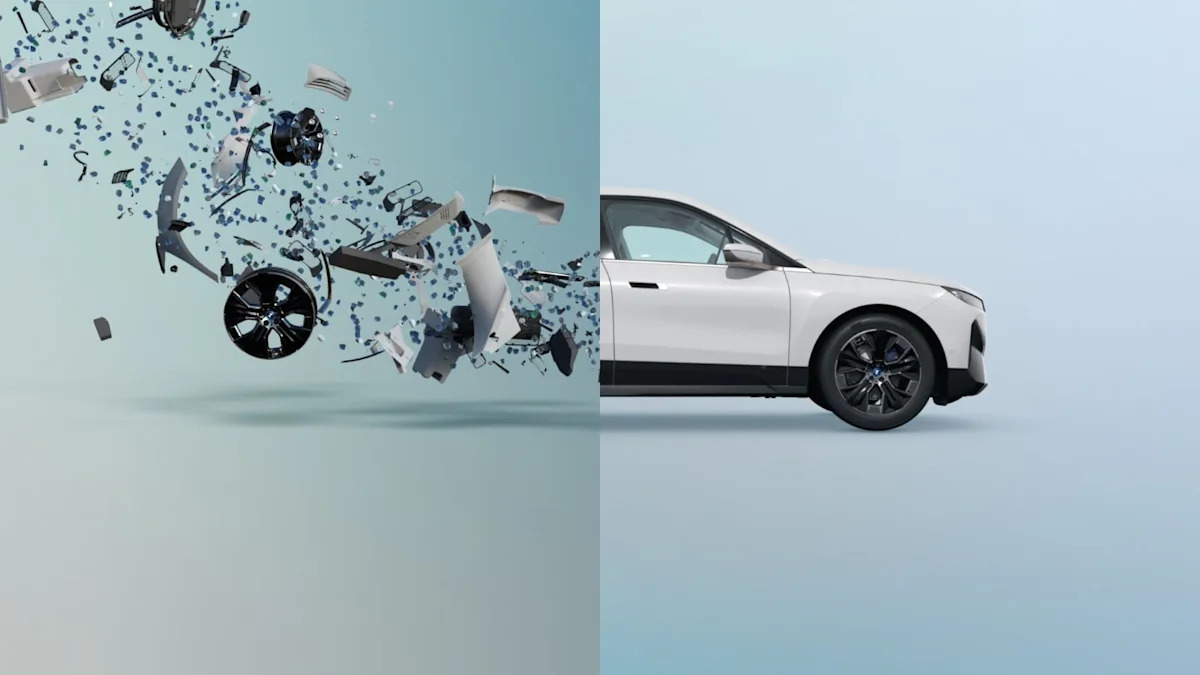
Photo Credit: BMW GROUP
According to industry reports, BMW Group and its Car2Car consortium partners have demonstrated that materials recovered from end-of-life vehicles (ELVs) can be returned to new automotive applications at significantly higher quality levels when advanced sorting and processing are applied. The research project increased its defined “Car2Car rate” from 6% under current market-standard processing conditions to 51% under expanded processing and sorting conditions.
The Car2Car rate measures the share of materials in an ELV that can, in principle, be recovered at sufficient quality for reuse in new industrial applications. The project examined 433 vehicles from 60 BMW Group models, including vehicles less than five years old, and evaluated material recovery across steel, aluminium, copper, plastics and glass.
Under a vehicle recycling trial involving only the compulsory dismantling typically carried out before recycling, the Car2Car rate across the five material groups was 6%. Advanced processing routes, including improved pre-sorting, modified shredding, material classification, sensor-based sorting and more precise aluminium alloy separation, increased the rate to 51%.
Steel showed the largest improvement, with its Car2Car rate rising from 1% to 81%. Aluminium increased from 23% to 52%, while copper rose from 48% to 68%. The results highlight greater near-term potential for high-quality metal recovery than for plastics and glass.
Steel scrap tested in BMW production
The project focused particularly on copper contamination in recovered steel. Copper from cables, connectors and other vehicle components can limit the use of ELV steel scrap in high-quality automotive steel because it is difficult to remove during conventional steelmaking.
Car2Car demonstrated that an additional sorting step could reduce copper contamination and produce steel scrap suitable for manufacturing automotive-grade flat steel. BMW has filed a patent application covering the process.
Following material and quality testing, steel coils produced using the recovered scrap were tested at BMW Group Plant Leipzig. More than 100,000 series parts were manufactured from the material and installed in vehicles, providing an industrial-scale demonstration of the material loop.
“This project has shown the potential in current material streams from end-of-life vehicles that have not yet been optimised for high-quality material loops,” said Hilke Schaer, Car2Car project manager at BMW Group. “The most significant progress was seen with steel: We were able to demonstrate that high-quality flat steel for automotive applications can be produced from end-of-life vehicle scrap.”
The field test demonstrates technical feasibility but does not mean the associated recycling and processing routes are already available throughout the market. BMW said scalable process chains, additional infrastructure and viable business models will be needed for broader deployment.
Plastics and glass remain more challenging
The project found that recycling systems for steel, aluminium and copper are already relatively established, while plastics and glass present greater technical challenges.
Automotive plastics vary widely in composition and often contain additives or form complex composite structures. Meeting the quality requirements of high-end automotive applications therefore requires more precisely designed combinations of dismantling, sorting and recycling technologies.
BMW said the findings will support its Design for Circularity approach and help inform future vehicle development, with the aim of making vehicles more suitable for high-quality material recovery. Experience from the project could also support cooperation with end-of-life vehicle recycling partners such as PreZero.
The research also provides data relevant to the broader automotive recycling industry as policymakers develop future requirements, including the European Union’s End-of-Life Vehicles Regulation. BMW said higher recovery rates will require investment in disassembly, sorting and recycling technologies, as well as greater digitalisation and regulatory frameworks that support material quality, traceability and the return of recovered materials to European supply chains.
“The circular economy is an integral part of the BMW Group’s corporate strategy. Car2Car shows that its full potential can be realised when the entire value chain is optimised,” said Alexander Efthimiou, Senior Vice President of Business Development at BMW Group.
The project was conducted by a consortium covering automotive manufacturing, materials production, recycling and academia. Participants included BMW AG, TU Bergakademie Freiberg, the Helmholtz Institute Freiberg for Resource Technology, Technical University of Munich, Scholz Recycling, STEINERT UniSort, thyssenkrupp Steel Europe, Salzgitter Mannesmann Forschung, Aurubis, Novelis Germany, OETINGER Aluminium and Pilkington Automotive Germany.
The project concluded that technical feasibility is only one condition for establishing higher-quality material loops. Access to ELVs, market conditions, investment requirements and viable economics across the recycling value chain will determine how much of the identified potential can ultimately be commercialized.
Source: BMW GROUP
SUNSHINE Spotlight: BMW’s Car2Car project shows that advanced sorting and processing could raise high-quality ELV material recovery from 6% to 51%, with metals offering the strongest near-term potential for closed automotive material loops.


